AZRIVA Software Development
          Company Ahmedabad
Case Study

AI-Powered Manufacturing Platform for Semiconductor & Electronics
Quality, Uptime, Visibility.

A semiconductor and electronics manufacturer was managing quality inspection, production monitoring, and maintenance coordination through manual processes and disconnected systems. Our team engineered a complete AI-powered manufacturing operations platform with Flutter, TensorFlow, PyTorch, and AWS — computer vision defect detection, predictive maintenance, real-time OEE dashboards, and mobile shop floor intelligence. Explore our mobile app development and AI solutions capabilities. 16+ weeks. Fixed price. Direct engineers.
Get a Fixed-Price Quote →
★★★★★ Rated by clients
|
100+ Mobile Apps Delivered
|
Fixed Price — No Surprises
|
NDA Before Discussion
|
Direct Engineer Access
|
Full Source Code Ownership
Confidential
Client HQ
16+
Delivered In (Weeks)
TensorFlow + PyTorch
AI Layer
Computer Vision
Inspection

The Problem — Manual Quality Control Failing at Production Scale

A semiconductor and electronics manufacturer was running quality inspection, equipment maintenance, and shop floor coordination through manual processes that could not keep pace with production volumes or complexity. Human inspectors missed defects that slipped through to later production stages — compounding rework and scrap costs. Equipment failures arrived without warning, stopping production lines that cost thousands per hour to operate. Production supervisors and engineers had no mobile access to live metrics — every data lookup required a return to a desktop terminal. As production volumes grew and product complexity increased, the manual operational model was creating a direct ceiling on quality, uptime, and growth. This is exactly where our AI-powered app development and mobile app development capabilities deliver the most transformative results.
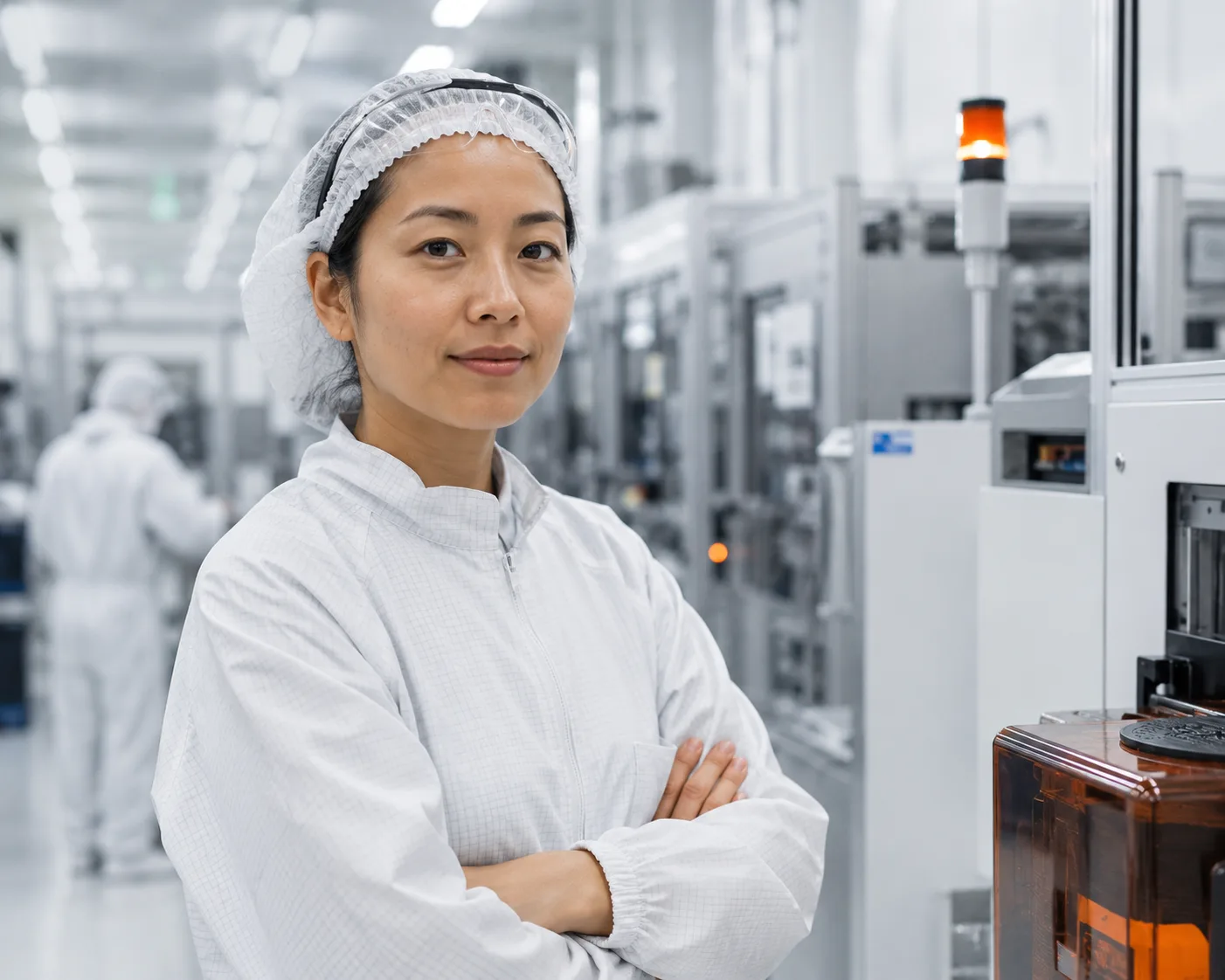

Manufacturing App Development — AI Semiconductor Operations Platform
AI Quality Inspection and Predictive Maintenance — Smart Factory Platform

One AI Platform. Quality at Scale. Uptime by Design. Intelligence in Hand.

We took a different approach from typical manufacturing digitisation projects that bolt analytics onto existing manual workflows. We replaced the manual processes entirely. Computer vision models built with TensorFlow and PyTorch inspect every unit on the production line at full production speed — consistent, objective, tireless. A predictive maintenance engine analyses equipment telemetry continuously, alerting maintenance teams to degradation patterns weeks before failure occurs. A Flutter mobile app puts live OEE metrics, defect trends, and equipment health status in every engineer's and supervisor's hands on the shop floor. One integrated platform. The same methodology we apply across all our custom software development and AI solutions engagements. Fixed price. Direct engineers throughout.

Technology Stack Powering This Mobile App

Every technology choice was made for manufacturing operational performance and AI model accuracy. TensorFlow and PyTorch for production-grade computer vision. Flutter for reliable mobile access in controlled manufacturing environments. AWS for the scalable, secure infrastructure that semiconductor manufacturing data demands.

Mobile Development
Mobile
Backend
Backend
Database
PostgreSQL
Database
Cloud & Infrastructure
AWS
Cloud
AI & Machine Learning
TensorFlow PyTorch
AI

Real Manufacturing Challenges. Real AI Solutions.

Three operational problems were creating quality escapes, unplanned downtime, and limited production visibility. Here is exactly what they were — and how our team eliminated each one with purpose-built AI manufacturing engineering.

01
The Problem

Manual Quality Inspection Missing Defects Until It Was Too Late

Quality inspection on semiconductor and electronics production lines was entirely manual — human operators visually checking units at defined inspection points. Manual inspection is inherently inconsistent. Operator fatigue, lighting conditions, subjective judgment, and throughput pressure all create variation in what gets flagged and what gets missed. Defects detected late in the production process carry compounding costs: rework at advanced stages, higher scrap rates, customer returns, and the brand damage of quality escapes reaching the end customer. At production volumes typical of semiconductor manufacturing, manual inspection is simply not capable of delivering the consistency the industry demands.

01
Our Solution

Computer Vision Defect Detection — Consistent Quality at Production Speed

We built TensorFlow and PyTorch-powered computer vision models trained on production defect data — surface anomalies, dimensional deviations, solder defects, component placement errors, and assembly failures specific to the client's product lines. The models run inference in real time on the production line, flagging defects and anomalies as units pass through inspection points at full production speed. Engineers review AI-flagged exceptions rather than inspecting every unit. Detection consistency is 100% — the same criteria applied to every unit, every shift, without fatigue or subjective variation. This is our AI-powered development methodology applied to a physical manufacturing constraint — the same AI engineering discipline we bring to all our AI solutions engagements.

02
The Problem

Equipment Failures Arriving Without Warning and Stopping Production

Semiconductor manufacturing equipment operates under extreme precision requirements — temperature stability, pressure consistency, vibration limits, and chemical concentrations all measured in fractions of tolerances. When equipment degrades, the production impact is immediate and severe: yield drops before the failure is obvious, maintenance teams scramble for root cause diagnosis, and unplanned downtime stops production lines that cost thousands per hour to operate. The reactive maintenance model — fix it after it breaks — is incompatible with the uptime requirements and cost structure of modern semiconductor manufacturing operations.

02
Our Solution

Predictive Maintenance Engine — Equipment Failures Predicted Weeks in Advance

We built a Node.js and PostgreSQL predictive maintenance engine that continuously analyses equipment telemetry from IoT sensors via MQTT and OPC UA protocols — temperature trends, vibration signatures, pressure fluctuations, cycle counts, and performance metrics. Machine learning models identify degradation patterns that precede equipment failure, generating prioritised maintenance alerts weeks before failure occurs. Maintenance teams shift from reactive emergency repair to planned, scheduled intervention. See how we apply similar real-time intelligence across our mobile app development and custom software development engagements.

03
The Problem

Shop Floor Engineers and Supervisors Without Mobile Production Visibility

Production supervisors and process engineers needed to physically visit desktop terminals to check production status, review quality metrics, access maintenance records, or investigate alerts. On a semiconductor fabrication floor where conditions require protective equipment and movement between clean zones is controlled and time-consuming, this desktop dependency created constant friction. Decisions were delayed. Alerts were missed. And the operational awareness that supervisors needed to manage complex production environments was always one step behind the actual state of the floor.

03
Our Solution

Flutter Shop Floor App — Live Production Intelligence on Any Device

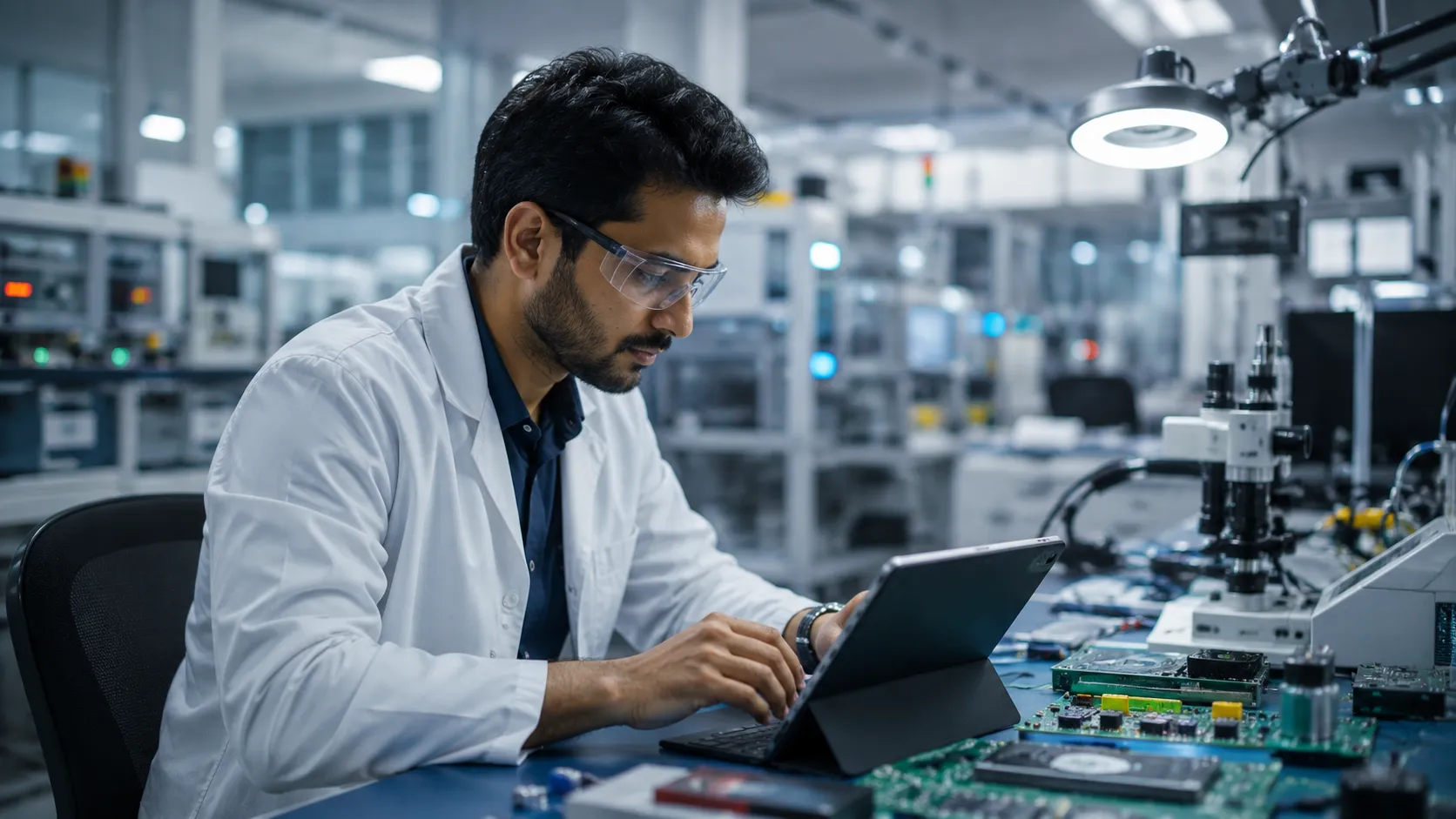
We built a Flutter cross-platform mobile app that puts real-time production intelligence in the hands of every engineer, supervisor, and quality team member on the shop floor. Live OEE metrics, yield rates, defect trends, equipment health status, and maintenance alerts are accessible from any iOS or Android device. Role-based dashboards deliver the right metrics and actions to each user type. If you are building for a similar multi-role industrial environment, our MVP development approach can get a working mobile ops tool live in 10–14 weeks at a fixed price.

Build an AI Manufacturing Platform Like This
at a Fixed Price

A complete AI-powered manufacturing operations platform — computer vision inspection, predictive maintenance, production monitoring, and mobile shop floor intelligence — engineered from scratch for your production environment. Tell us about your manufacturing operation and get a detailed scope and fixed-price quote within 48 hours.

Reach Out Now
+91 96389 24757
Get a Fixed-Price Quote

How We Delivered This Project

16+ weeks from manufacturing operations discovery to live production deployment. Every milestone agreed upfront. Fixed price locked before development began. Direct engineer access throughout — no account managers, no communication gaps.

01

Manufacturing Operations Discovery

Deep analysis of production line workflows, inspection bottlenecks, equipment failure patterns, and mobile access requirements. AI model training data requirements, MES and IoT integration scope, and role-based mobile dashboard architecture agreed at fixed price before development began.

02

AI Vision Model Training & Validation

TensorFlow and PyTorch computer vision models trained on production defect image datasets — surface anomalies, placement errors, solder defects, and dimensional deviations specific to the client's product lines. Models validated against held-out test sets before integration. Inference optimised for real-time production line speed.

03

IoT Integration & Predictive Maintenance Engine

MQTT and OPC UA integration layer built for real-time equipment telemetry ingestion from factory sensors and control systems. Node.js predictive maintenance engine processes telemetry streams, identifies degradation patterns, and generates prioritised maintenance alerts. PostgreSQL stores the full equipment health history for trend analysis and model improvement.

04

Flutter Shop Floor Mobile App

Flutter cross-platform mobile app built for iOS and Android shop floor use — real-time OEE metrics, yield dashboards, defect trend analysis, maintenance alert management, and work order approval. Role-based interfaces for process engineers, maintenance teams, and production supervisors. Designed for use in controlled manufacturing environments.

05

Production Dashboard & MES Integration

React-based production monitoring dashboard built for supervisors and operations managers — live line status, yield rates, downtime tracking, OEE scores, and defect trends across all production lines. MES and ERP integration centralising factory data. AWS cloud infrastructure configured for manufacturing data security and scalability.

06

Deployment, Validation & Go-Live

Production line deployment of computer vision inspection system with live validation against manual inspection benchmarks. End-to-end testing of predictive maintenance alerts, mobile app workflows, and dashboard data accuracy. AWS infrastructure load tested for full production data volumes. Full documentation and model training pipelines delivered at handover.

Manufacturing Benefits We Delivered

The measurable improvements delivered — in defect detection, equipment uptime, shop floor visibility, and AI platform scalability — by building a purpose-designed AI manufacturing operations platform from scratch.


AZRIVA mobile app development team — Ahmedabad, India
Predictive Maintenance
Equipment Uptime

Predictive maintenance alerts give maintenance teams weeks of advance warning before equipment failure — replacing the reactive emergency repair cycle that disrupts production schedules and generates unplanned downtime costs. Equipment health trends are tracked continuously across all monitored assets. Maintenance is planned, budgeted, and executed during scheduled windows rather than scrambled in response to production stoppages. Equipment uptime improved across the monitored asset base from the first quarter of deployment.

AI Defect Detection
Quality Control

Computer vision models inspect every unit at production speed — applying consistent, objective defect detection criteria to 100% of output without operator fatigue or subjective variation. Engineers review AI-flagged exceptions rather than manually inspecting every unit. Defect escape rates dropped measurably. The quality team shifted from reactive defect-finding to proactive quality management, supported by real-time defect trend data that identifies process drift before yield impact becomes significant.

Floor-Level Visibility
Mobile Intelligence

Production supervisors and process engineers have real-time manufacturing intelligence in their hands wherever they are on the shop floor. Live OEE metrics, yield rates, defect trends, and equipment health status are accessible from any device without returning to a desktop terminal. Role-based dashboards deliver the right data to each user type — no information overload, no irrelevant metrics. Decision latency on the shop floor was reduced from hours to seconds.

AI Foundation Built
Platform Scalability

The AWS-hosted architecture and modular AI pipeline provide a scalable foundation for expanding manufacturing intelligence across additional product lines, production facilities, and AI use cases. New defect types can be added by retraining the vision models with additional labelled data. New equipment types can be added to the predictive maintenance engine. The digital twin layer is architecturally ready for simulation and process optimisation use cases. The platform grows with the manufacturing operation.

AZRIVA software development team Ahmedabad — mobile app development

How We Engage With Businesses

Three ways to work with us — all fixed price, all with direct engineer access, all with full source code ownership.

Most Popular
Fixed-Price Project

Scope agreed, price locked, timeline fixed. You know exactly what you get, when you get it, and what it costs — before we write a single line of code.
Flexible
Dedicated Team

A dedicated team of engineers embedded in your workflow. Direct access, daily standups, same-day responses. Scale up or down as your product evolves.

Advisory
Tech Consultation

Not ready to build yet? Talk to our engineers about your architecture, tech stack, or product roadmap. No sales pitch — just honest technical guidance.

Industry-Specific Development Solutions

We build apps & AI solutions for 14+ industries. Deep domain knowledge and current market trends shape every app we design and engineer.

1 / 7

Technologies & Services We Work On

We use the right technology for each project — battle-tested stacks chosen for performance, scalability, and long-term maintainability.


Mobile App Development — AZRIVA
Mobile
App Development
AI & ML Solutions — AZRIVA
AI
AI & ML
Solutions
Website Development — AZRIVA
Website
Development
E-Commerce Development — AZRIVA
E-Commerce
Development
Platform & APIs — AZRIVA
Platform
& APIs
Software Solutions — AZRIVA
Software
Solutions

Mobile App & AI Development Guides

Practical guides, honest comparisons, and engineering insights from our team.

Flutter vs Native App Development — Which Should You Choose? — AZRIVA Insights
Flutter

Flutter vs Native App Development — Which Should You Choose?

A practical breakdown of Flutter vs native app development — covering cost, performance, speed to market, and long-term maintainability. Written for founders and product teams making the build decision.

FlutterMobile App
Read Article
Fixed Price App Development — Why It Beats Hourly Billing Every Time — AZRIVA Insights
Mobile App

Fixed Price App Development — Why It Beats Hourly Billing Every Time

A straight-talking breakdown of fixed price app development versus hourly billing — covering budget control, risk exposure, project scope, and which pricing model is right for your business.

Fixed PriceApp Development
Read Article
How to Integrate AI Into Your Mobile App — Complete Guide — AZRIVA Insights
AI

How to Integrate AI Into Your Mobile App — Complete Guide

A straight-talking guide to AI integration in mobile apps — covering use cases, implementation approaches, cost expectations, and how to add AI features to an existing app without starting from scratch.

AI IntegrationMobile App
Read Article
View All Articles

Ready to Build Your Next App?
at a Fixed Price

Tell us about your project. We'll give you a realistic scope and a fixed-price quote within 48 hours. No agency fluff. Direct engineers.

Reach Out Now
+91 96389 24757
Get a Fixed-Price Quote

Questions From Business Owners

Real questions from founders and business owners — answered directly and honestly.

Updated May 2026
Cost depends on AI model complexity, number of defect types for computer vision training, production line integration requirements, IoT device connectivity, and mobile app scope. A production-ready AI manufacturing platform with computer vision inspection, predictive maintenance, real-time production monitoring, and mobile shop floor access typically represents a significant but well-defined investment. We provide a fixed price after a detailed discovery session — no hourly billing, no open-ended invoices. Visit our mobile app development page or contact us for a scope and fixed-price quote within 48 hours.
A full AI manufacturing platform with computer vision defect detection, predictive maintenance, production monitoring dashboard, Flutter mobile app, and IoT integration typically takes 14–20 weeks from discovery to live deployment. This project was delivered in 16+ weeks at a fixed price. Timeline depends on AI model training data availability, number of production lines, IoT integration complexity, and MES/ERP connection requirements.
Computer vision defect detection uses TensorFlow or PyTorch deep learning models trained on labelled images of production defects — surface anomalies, placement errors, dimensional deviations, solder defects, and component failures specific to the product line. Cameras mounted at inspection points on the production line capture images of every unit. The model runs inference in real time, classifying each image as pass or fail and flagging specific defect types for engineer review. Detection consistency is 100% — the same criteria applied to every unit at production speed, without fatigue or subjective variation. Models improve with additional labelled data over time. This is a core capability of our AI solutions practice.
Flutter delivers a cross-platform mobile experience for shop floor use on iOS and Android — consistent performance in controlled manufacturing environments. Node.js handles the backend API layer for production data management, IoT telemetry processing, and alert routing. TensorFlow and PyTorch power the computer vision and predictive maintenance AI models. PostgreSQL provides a robust database for production records, defect history, and equipment telemetry. AWS provides scalable, secure cloud infrastructure for manufacturing data at enterprise volumes. See our full AI-powered app development capabilities.
Yes. This project was delivered under a full NDA. The client name, product lines, defect types, and production data remain confidential. We regularly work under NDA for semiconductor, electronics, and precision manufacturing clients where IP protection and operational confidentiality are commercial requirements. Full technical and outcome details are available to qualified prospects under NDA on request.
Manufacturing IoT integration uses MQTT for lightweight sensor data messaging and OPC UA for industrial equipment connectivity — both are standard protocols for factory device communication. The Node.js backend subscribes to MQTT topics and OPC UA data streams from production equipment, ingesting real-time telemetry into the PostgreSQL database. The predictive maintenance models analyse this telemetry continuously. New sensors and equipment types can be added to the integration layer without architectural changes. See our custom software development page for more on IoT integration architecture.
We build AI manufacturing platforms for both semiconductor fabrication environments and electronics assembly operations. The core AI capabilities — computer vision inspection, predictive maintenance, production monitoring, and mobile shop floor access — apply across both contexts with product-specific model training and workflow configuration. Our MVP development approach can scope and deliver a working proof-of-concept for a single production line in 10–14 weeks at a fixed price. Contact us to discuss your specific manufacturing environment.
💬 Chat with us on WhatsApp